AI agent platform for product development
Using AI in real product development requires it to fit the deliverables and practices unique to each field. DC Agentiqs combines practical know-how with features such as HITL-based review and approval, long-term memory that preserves context, and AI-readable diagrams and sequence diagrams in development documents, helping teams put AI agents to work in product development.
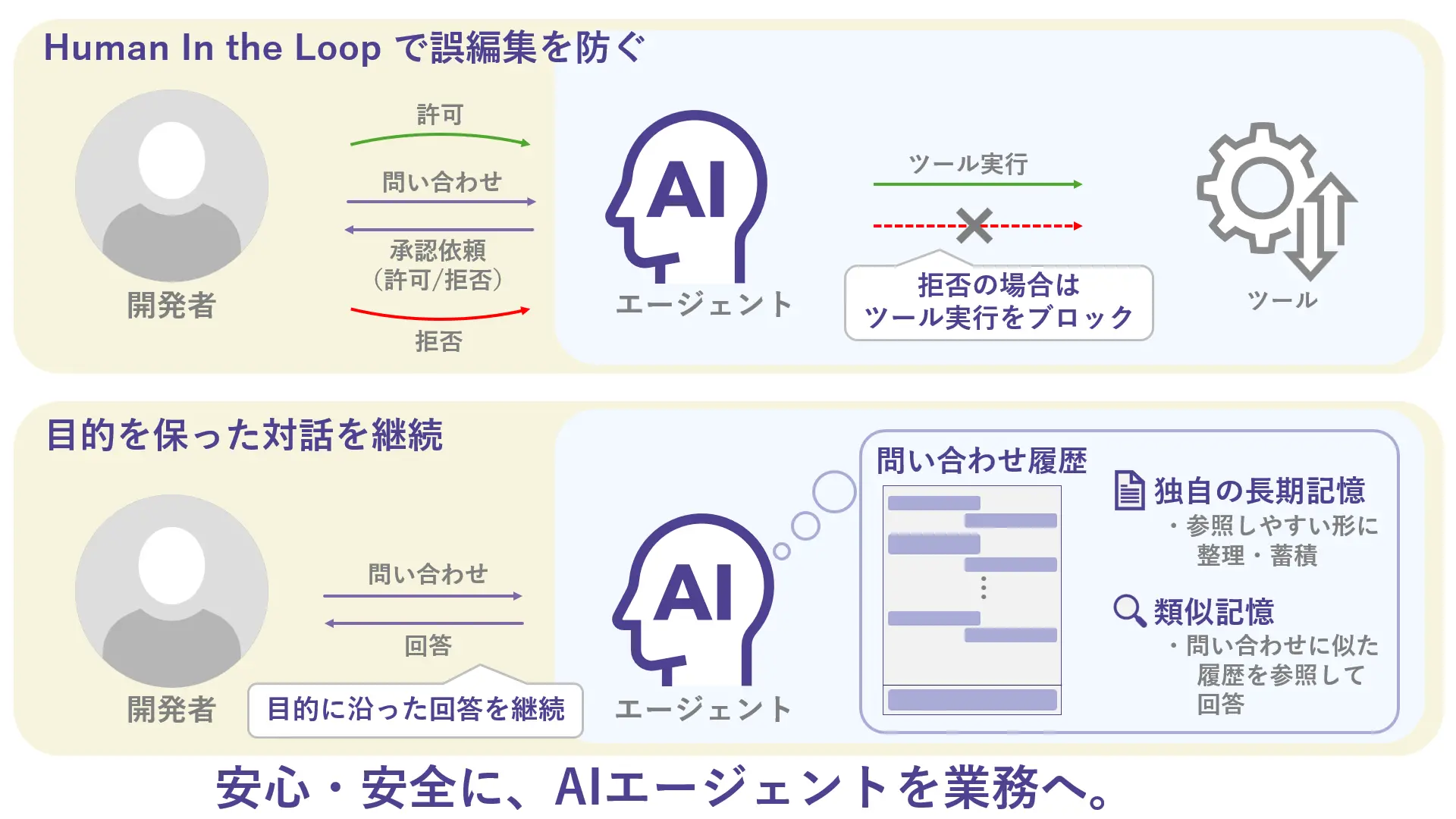
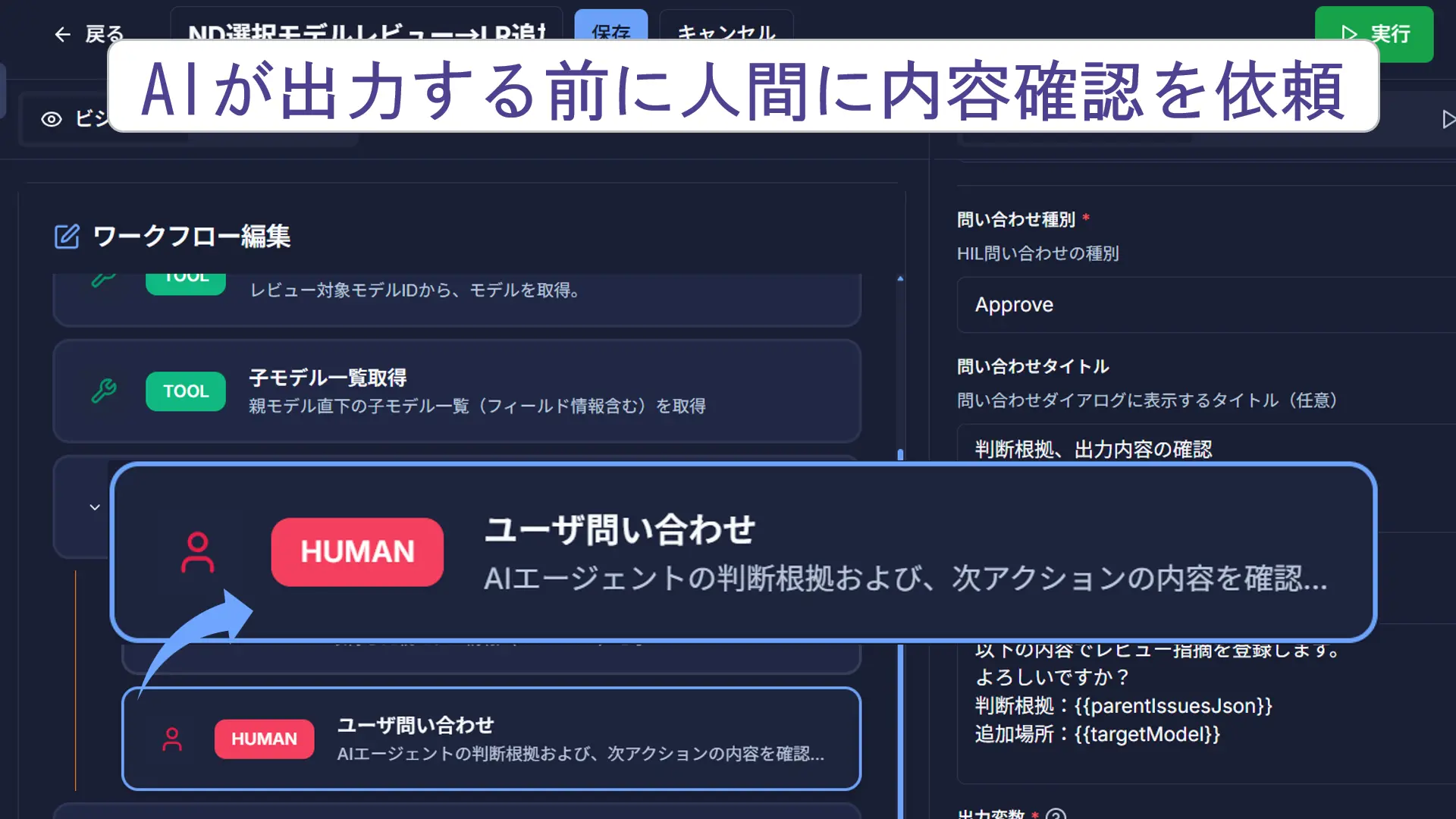
Both the chat feature and the workflow feature in DC Agentiqs include HITL (Human In the Loop). By building in inquiry and approval flows that involve a person, it prevents AI from making unauthorized updates or mistaken edits. This lets people stay in control of the AI's output, so it can be safely applied even to important decisions and update tasks.
DC Agentiqs's chat feature includes its own built-in long-term memory. This means that even after a long brainstorming session with an AI agent during design work, the conversation can continue naturally without losing sight of its current goal or forgetting earlier details.
Convert information in Excel grid sheets, ruled tables in PDFs, and shapes drawn with AutoShapes into a format AI can interpret. By preserving document structure and relationships while making diagram and sequence-diagram elements, relationships, and process flows easy for AI to use, existing design assets can support AI-agent answers and deliverable creation.
Use reasoning-capable models such as GPT-5 series, Claude 4 series, and Gemini 2.5 or later. Choose from five thinking levels—off, low, medium, high, and maximum—for each chat, agent, and workflow. Adjust the depth of analysis to suit work with many considerations, including requirement clarification, design decisions, specification analysis, and reviews.
Generate specialized subagents at runtime for each task and divide responsibilities such as research, comparison, specification organization, design decisions, and reviews. Parallel and background execution are supported, and interim results are consolidated into a final summary, helping keep the conversation context from growing too large during extended analysis.
Key standard features
- Reasoning-capable models and five thinking levels
- Dynamic subagents (division of responsibilities)
- Use of existing design assets with AI (Excel grid sheets, ruled PDF tables, shapes, and sequence diagrams)
- HITL (Human In The Loop)
- Long-term memory
- Web search
- Code interpreter (calculations, aggregation, and data processing)
- Multimodal
- Display of processing details and events